Upload your CV today!
Ready for your next career move? Apollo Solutions recruits across Technology and Corporate Governance. If that's your field, upload your CV, and we'll be in touch with roles that fit.


In a world of constant belt-tightening, internal audit teams are under more pressure than ev...

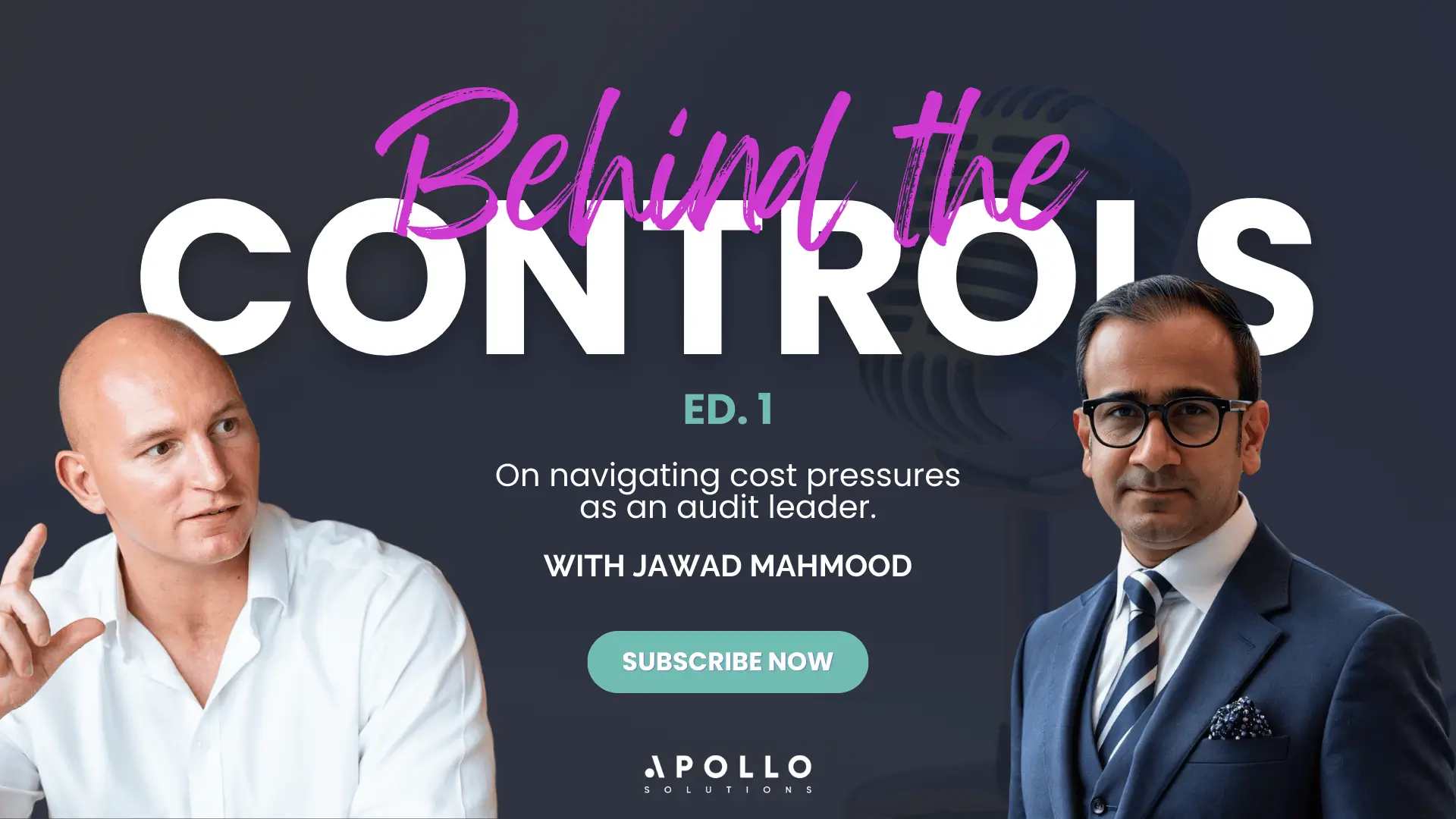
In a world of constant belt-tightening, internal audit teams are under more pressure than ever. But what if cost-cutting didn’t mean cutting back? In the 1st edition of Behind the Controls, I sat down with Chief Auditor Jawad Mahmood to explore how audit leaders can navigate cost pressures, without losing impact.
Cost pressures are nothing new. But today, they’re sharper, more structural, and spreading across all industries. For internal audit leaders like Jawad Mahmood, the challenge isn’t just defending the function. It’s proving that audit can lead - and even unlock - smarter savings.
“It’s not about protecting audit. It’s about delivering more with what you have.”
Jawad brings over two decades of experience across the Big 4, Financial Services, Insurance, FinTech and government. His career has taken him from London to Canada and Dubai, leading audit teams through transformation, regulatory change, and cross-border complexity.
He’s clear about what the cost-cutting era demands - and how internal audit can meet it head on.
In a climate of budget freezes and steep cost reduction targets, internal audit can’t operate in a vacuum. Jawad believes the best leaders don’t resist the pressure, they respond to it smartly. Here’s how:
Jawad looks beyond the annual plan. He asks: “what risks could hurt us now?”. And: “what controls protect our future?”. Focusing on what matters most, means audit functions can use their time where it counts.
Audit must be part of the broader conversation. “We are part of the organisation. We can’t detach ourselves”, Jawad says.
That means staying in sync with the exec team’s priorities. If they’re focused on savings, audit needs to contribute and show how it’s doing so.
When audit links to what the business is trying to achieve, it’s also easier to show value. Talk to leaders about their biggest challenges. Work to support resilience and growth, not just compliance.
Still relying on fixed cycles and manual processes? That’s not going to cut it. Adapt or become redundant.
“You can’t continue with traditional audit methodologies. Agile auditing is becoming the norm.”
Jawad stresses adopting agile methods and embracing tech advancements to keep up with change and maximise impact.
Smaller, faster, more focused audits reduce wasted effort and allow for quick pivots. Simple automation tools help save hours on manual work. And data analytics highlight trends and spot fraud earlier. This frees up people to focus on deeper insight, not just ticking boxes.
A key challenge is external spend. External consultants can be valuable but they come at a price, and a big one. But for Jawad, that price isn’t always justified. Instead, he advocates for a hybrid approach:
“Instead of outsourcing end-to-end, we bring in experts just for the technical bit. It saves us money and gives my team a chance to upskill. It’s not about saying no to outsourcing, it’s about using it wisely.”
This approach not only cuts costs - it strengthens internal capability and ensures ownership stays within the audit function.
Hiring freezes are common. But Jawad sees opportunity in constraints. When resources are tight:
“It’s about striking the right balance. Internal teams are more cost-efficient, but you can’t compromise on expertise.”
By investing in upskilling and knowledge transfer, you avoid repeat dependence on expensive consultants, and retain critical knowledge in-house.
How do you defend “nice-to-have” audits when budgets are being slashed? Jawad’s framework includes:
“From 100-page post-mortems to live conversations. That’s where we add real value.”
Trusted… but independent. Striking the right tone matters, Jawad is clear: “We can’t blur the line. But when the business picks up the phone to ask our opinion, that’s when I know we’re doing something right.”
From AI to real-time analytics, tech advancements are changing the way we operate.
“Tech won’t replace auditors. But it will replace how we spend our time”, Jawad says. “AI can write your report. But it can’t interpret your context. That’s where audit adds value.”
How should leadership respond?
Automate the admin, refocus on insights, and upskill now.
And yes, some resource will be freed up. But Jawad sees this as an opportunity, not a threat:
“You either redeploy that capacity or accept that you don’t need it. But you don’t resist it.”
In Jawad’s world, cost-cutting isn’t a threat: it’s a test of relevance.
Top teams, he says, deliver:
“The big players can spend big on AI. But smaller teams can still innovate, it’s about mindset, not money.”
Audit teams that prove their worth, adapt fast, and deliver visible value won’t just survive - they’ll be recognised as strategic enablers. Jawad: “We can’t be seen as a cost centre. We have to show we’re part of the solution.”
Subscribe to Behind the Controls to stay ahead of what’s shaping Audit, Risk and Compliance leadership, and how top professionals are navigating it.